
The next Somvati Amavasya is on Monday, 9 November 2026. In New Delhi the Amavasya tithi runs from 11:29 AM on Sunday, 8 November to 12:32 PM on Monday, 9 November.
Somvati Amavasya is the new moon that happens to fall on a Monday. An Amavasya comes every lunar month, but only now and then does its dark tithi land on Somvar, the day of the Moon and of Lord Shiva. That coincidence is what gives the day its name and its standing. Some years bring no Somvati Amavasya at all; others bring two or three.
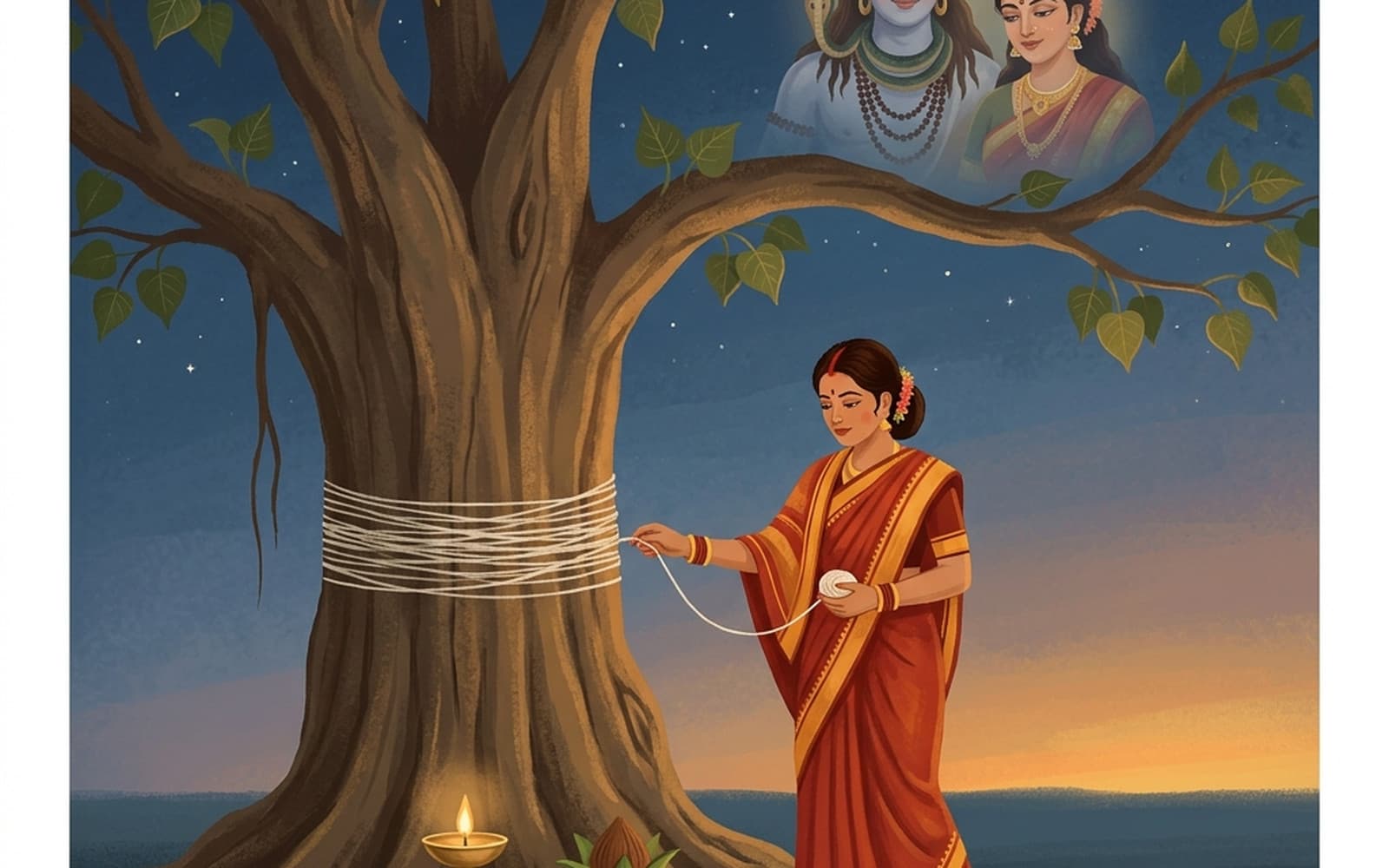
Because Monday belongs to Shiva, this new moon does something the others do not: it folds the ancestor rites of Amavasya together with the worship of Shiva and Parvati. Married women keep it for the long life and wellbeing of their husbands, much as they keep Vat Savitri, walking the Peepal tree 108 times and winding a cotton thread around its trunk. The morning is given to tarpan and charity for the departed.
Somvati Amavasya at a glance
Date in 2026
Monday, 9 November 2026
Tithi
Amavasya (new moon)
Weekday
Monday (Somvar)
Worship
Shiva-Parvati & ancestors
Observance
Peepal parikrama, tarpan
Date & tithi window
The Monday new moon and its tithi times for your city
Tithi begins
08 November 2026, 11:29 AM
Tithi ends
09 November 2026, 12:32 PM
| Upcoming dates | Day |
|---|---|
| 9 November 2026 | Monday |
| 8 March 2027 | Monday |
| 2 August 2027 | Monday |
Times shown for New Delhi; pick your city on the Amavasya calendar for local timings.
Why a Monday new moon carries weight
The Moon's day, Shiva's day, and the no-moon tithi
An Amavasya is the tithi of the vanished Moon, and by long custom it is the day set aside for the departed, for pitru tarpan and for remembering those who came before. Monday, Somvar, carries two associations of its own: it is the Moon's weekday, and it is the day given to Lord Shiva. When the no-moon tithi settles on the Moon's own day, those threads cross, and the alignment is held to be uncommonly auspicious.
Part of the day's standing is simply that it is rare. A new moon arrives every lunar month, but its landing on a Monday is a matter of the calendar's drift; some years offer no Somvati Amavasya, others two or three. What might have passed as an ordinary Amavasya becomes, on a Monday, a day people plan around: the ancestors in the morning, Shiva and Parvati through the rest of it.
The Peepal parikrama and the day's vrat
108 circuits, a cotton thread, and worship of Shiva-Parvati
The day usually begins before sunrise with a bath and a sankalp, the quiet resolve to keep the vow. Where a family observes the ancestor rites, tarpan and daan come first, in the morning. The heart of the observance, though, is the Peepal, the ashvattha tree that tradition regards as a dwelling of Vishnu and the Trimurti.
Married women walk around the Peepal, offering water, raw milk, flowers, sandal paste and a lamp at its root, and winding a length of raw cotton thread around the trunk with each round. The circuits are counted to 108. The vow is kept for the long life and wellbeing of the husband and the household, close in spirit to Vat Savitri, and many pair it with the worship of Shiva and Parvati, since the Monday is theirs. Some read or hear the Somvati Amavasya katha before breaking the fast.
On the rituals here
The katha of Somvati Amavasya
The merchant's daughter, the Peepal, and a fate reversed
An old story is told to explain the day's power. A poor merchant had seven sons, all of them married, and one daughter still to be wed. A learned traveler who read the girl's signs told her worried parents that her married life was fated to be brief: she would be widowed soon after her wedding.
There was a way, he said. Across the river lived a washerwoman of rare devotion to her husband; if the girl served her humbly and won her blessing, and kept the Peepal vow on a Somvati Amavasya, the fate could be turned. So each day the girl crossed the water to do the older woman's work and fetch her water, asking nothing in return. In time the washerwoman, moved by the girl's service, gave her the sindoor from her own parting as a blessing.
When the day of the vow at last came, the girl circled the Peepal 108 times, winding her thread, and the danger that hung over her marriage lifted. Between them, one woman's steadfastness and another's vrat had undone what was thought to be written. That reversal, a life set right by devotion kept on a Monday new moon, is why the katha is still read on Somvati Amavasya.
Who keeps Somvati Amavasya, and how
Married women, families honouring ancestors, and Shiva devotees
Three kinds of observance meet on this day. Married women keep the vrat and the Peepal parikrama for the long life and wellbeing of their husbands and families. Households that honour their ancestors give the morning to tarpan, shraddha and daan, and where they can, take a dip in a sacred river before the rites. Devotees of Shiva mark the Monday with abhishek and worship, joining the two occasions the day already holds.
None of this is a matter of compulsion. The tradition treats the vrat as an offering made according to one's faith and capacity: a bath, a lamp, a few rounds of the Peepal and a sincere remembrance of the departed are enough where a full observance is not possible.
See today's live panchang for your city
Tithi, nakshatra, sunrise and the day's muhurat, computed for wherever you are.
Somvati Amavasya — questions answered
The Monday new moon, the Peepal vow and the morning rites