
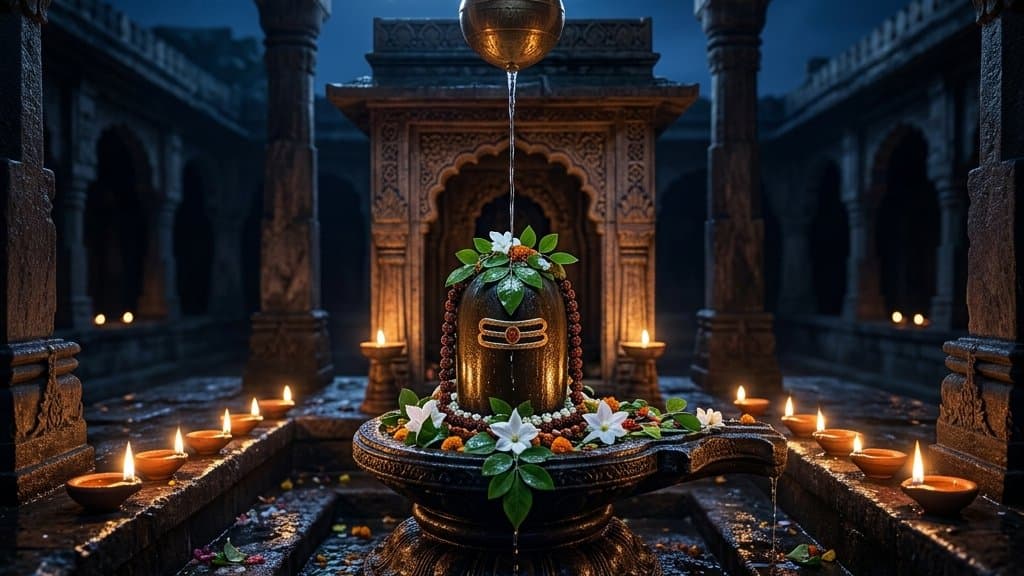
Of all the Mondays and vrats of Sawan, the Shivratri that falls within the month is among the most charged nights for a Shiva devotee. Sawan Shivratri — the Masik (monthly) Shivratri of the Shravan month — is kept on the Krishna Chaturdashi, when the faithful fast, keep vigil, and pour water over the Shivling through the four watches of the night.
In 2026 this night falls on Tuesday, 11 August, and the main worship is held at the midnight Nishita Kaal in the small hours of 12 August. Below are the exact tithi and Nishita Kaal timings for New Delhi, the four-prahar muhurat table, and the jalabhishek puja vidhi — with a clear note that the vrat is kept on the 11th, not the 12th.
Sawan Shivratri 2026 at a glance
Festival night
Tue, 11 August 2026
Tithi
Krishna Chaturdashi
Tithi begins
11 Aug, 04:55
Tithi ends
12 Aug, 01:54
Nishita Kaal puja
00:05 – 00:48 (12 Aug)
Parana
Morning of 12 August
What Sawan Shivratri is, and when
The Masik Shivratri that falls within Shravan
Every lunar month has a Shivratri on its Krishna Chaturdashi — the Masik Shivratri. The one that falls in Shravan carries special weight, since the whole month is dedicated to Shiva. In 2026 the Chaturdashi runs from 04:55 on 11 August to 01:54 on 12 August, so the night of the 11th is the Shivratri night. Because Shivratri worship is a night observance centred on the midnight Nishita Kaal, the vrat is kept on 11 August and concluded the next morning. The 12th of August is Shravan Amavasya, a separate observance — a point on which many calendars are misread.
Night of 11 August, not the 12th
Nishita Kaal & the four-prahar muhurat
New Delhi timings for the night of 11 August 2026
Nishita Kaal — main puja
00:05 – 00:48 (early 12 August)
| Prahar | Window | Offering |
|---|---|---|
| First Prahar | ≈ 18:57 – 21:38 (11 Aug) | Water (jalabhishek) |
| Second Prahar | ≈ 21:38 – 00:20 | Curd (dahi) |
| Third Prahar | ≈ 00:20 – 03:01 (12 Aug) | Ghee (ghrita) |
| Fourth Prahar | ≈ 03:01 – 05:42 | Honey (madhu) |
Prahar windows divide the night from sunset to sunrise into four; the times above are approximate and shift with your city.
Jalabhishek & puja vidhi
How the night worship of Shiva is kept
The vrat begins at dawn on 11 August with a sankalp (vow) to fast and worship through the night. Devotees bathe, keep a fruit-and-milk fast, and visit the Shiva temple or worship a Shivling at home. The abhishek is offered with water, and often milk, curd, ghee, honey and Ganga water, followed by bilva (bel) leaves, dhatura, white flowers, sandal and vibhuti, with the Panchakshari mantra Om Namah Shivaya. Those keeping the full jagaran worship in each of the four prahars; the central puja is at Nishita Kaal. The fast is broken (parana) on the morning of 12 August after the concluding aarti.
Rudrabhishek
Why Sawan Shivratri matters to Shiva devotees
The most sacred Shivratri of the most sacred month
Sawan is Shiva's own month, and its Shivratri is held to be doubly potent for the removal of sin, the fulfilment of vows, and peace of mind. Devotees pray for health, for marriage and marital harmony, and for freedom from long-standing difficulties, since Shiva is Ashutosh — the one quickly pleased by simple, sincere devotion. A single lamp, a bilva leaf and a heartfelt Om Namah Shivaya on this night are said to carry the weight of far greater ritual.
Mahamrityunjaya Jaap
Check the Nishita Kaal for your own city
These timings are computed for New Delhi. For your city's exact sunset, midnight Nishita Kaal and the night's muhurat windows, use our live tools.
Frequently asked questions
Sawan Shivratri 2026 date, Nishita Kaal and vrat