
Mauni Amavasya 2027 is on Saturday, 6 February. In New Delhi the Amavasya tithi runs from 7:06 PM on Friday, 5 February to 9:26 PM on Saturday, 6 February.
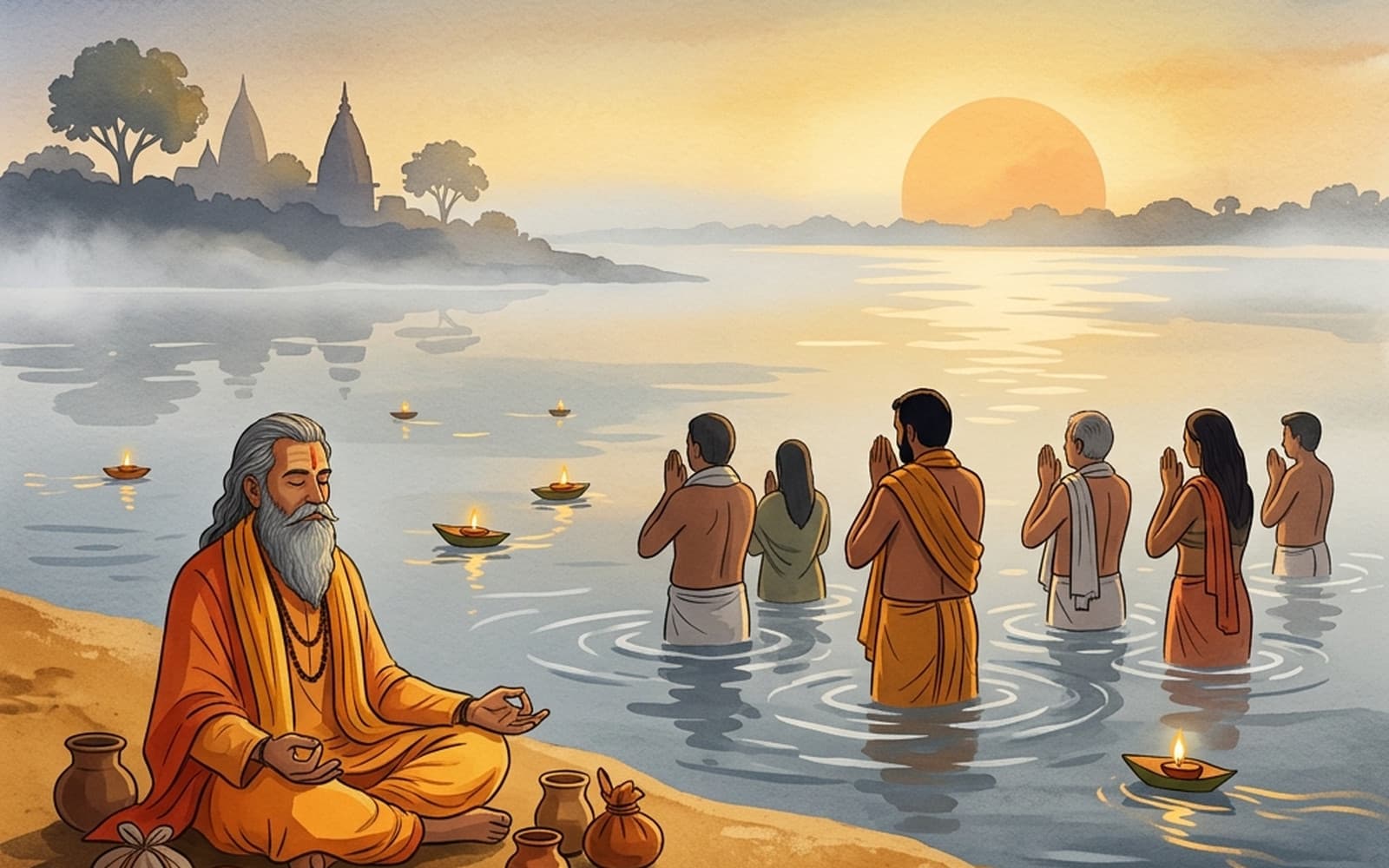
Mauni Amavasya is the new moon of Magha, and the most sacred bathing day of a month already given over to bathing. Before first light, pilgrims wade into cold river water — above all at the Sangam in Prayagraj — and many keep the day in silence. The name carries that silence: mauna, the stillness of a muni, a sage who has learned that some words are better guarded than spent.
It falls once a year, deep in the northern winter, when Magha's Kalpavas draws the devout to the riverbanks. On this one amavasya the crowd is largest and the discipline strictest: a bath at dawn, a vow of few words or none, japa under the breath, and a gift of food and sesame to those who have less. For the ancestors it is a day of tarpan; for the one who keeps it, a day to let the mind grow quiet enough to hear itself.
Why the day is kept in silence
Mauna, the discipline of the muni
The word behind the name is mauna — silence. A muni is one who has taken it up as a practice, not because speech is forbidden but because it is spent so carelessly. Mauni Amavasya asks for a day of it: some keep total silence from the pre-dawn bath until the next sunrise, others simply hold their tongue from idle and unkind words. Either way the aim is the same — to turn the attention inward on a day when the moon is dark and the mind is meant to follow it into stillness.
There is an older thread in the name too. Some read Mauni as a memory of Manu, the first man and lawgiver of the age, whose name sits close to muni; the day is then held to carry something of that beginning, a clean slate at the turn of the fortnight. Silence, in that reading, is not withdrawal but preparation — the quiet before a fresh start, kept while the body is washed in holy water and Magha reaches its most sacred hour.
Mauni Amavasya at a glance
Date in 2027
Saturday, 6 February 2027
Lunar month
Magha · Krishna Paksha (Amavasya)
Deity & focus
Lord Vishnu (Madhava) · Pitru (ancestors)
Observance
Maun (silence) & Sangam snan
Also called
Maghi Amavasya · Mauna Amavasya
Date & tithi timing
Observance day and amavasya window for your city
Tithi begins
05 February 2027, 7:06 PM
Tithi ends
06 February 2027, 9:26 PM
| Upcoming dates | Day |
|---|---|
| 6 February 2027 | Saturday |
| 26 January 2028 | Wednesday |
Times shown for New Delhi; pick your city on the Amavasya calendar for local timings.
The great bath at the Sangam
Prayagraj, the Magh Mela and the Kumbh
Magha is the month of Magha-snan, when the faithful bathe each dawn in a sacred river, and Prayagraj is its centre. There the Ganga and the Yamuna meet the unseen Saraswati at the Triveni Sangam, and for the weeks of the Magh Mela thousands live on the sands in Kalpavas, rising before light for the cold water. Of all those mornings, Mauni Amavasya draws the greatest number — it is the principal snan of the mela, the day the whole encampment moves to the water at once.
In the years when the Kumbh or Ardh Kumbh falls at Prayagraj, this same day becomes an Amrit Snan — the bathing procession once called the Shahi Snan — when the akharas of ascetics go down to the Sangam in order, and the crowd behind them is counted in the millions. A dip at the Sangam on this amavasya is held to wash away long-carried wrong; that belief, more than any decree, is what fills the riverbank before dawn.
How Mauni Amavasya is observed
Bath, silence, japa and the winter gift
The day turns on its bath. Those who can reach a holy river bathe there before sunrise; those who cannot add a little Ganga water to the bath at home and take it with the same intent. Many make a sankalp first — the quiet resolve to keep the vow — and only then step into the water, offering arghya to the rising sun.
From the bath onward the vow of silence holds, as fully as one is able. The hours that would go to talk go instead to japa and meditation, to the reading of a katha, or to the worship of Vishnu and of the peepal tree. Because Magha is cold, the day's charity answers the cold: sesame and the sweets made from it, warm clothing and blankets, and anna-daan, a gift of food, given to the poor and to brahmins. The giving is not a fee for merit but the outward face of the same restraint the silence practises within.
Kept according to your means
For the ancestors, and for the self
Tarpan, and the quiet the day leaves behind
Like every amavasya, this is a day for the pitr, the ancestors. Many offer tarpan — water given with sesame and the ancestors' names — and set aside food in their memory, asking that the line before them rest easy. On Mauni Amavasya, at the turn of Magha and often at the water's edge, that offering is felt to carry further than usual.
The day's other work is done inward. A dark moon, a cold river, a mouth kept shut and a mind kept still — the whole design points at cleansing, of the body in the water and of the self in the silence. Those who keep it well speak of the days after as unusually clear, the noise of ordinary wanting turned down for a while. That is the quiet promise of the silent new moon: less said, and more heard.
See today's live panchang for your city
Tithi, nakshatra, sunrise and the day's muhurat — computed for wherever you are.
Mauni Amavasya — questions answered
Silence, the Sangam bath and tarpan