
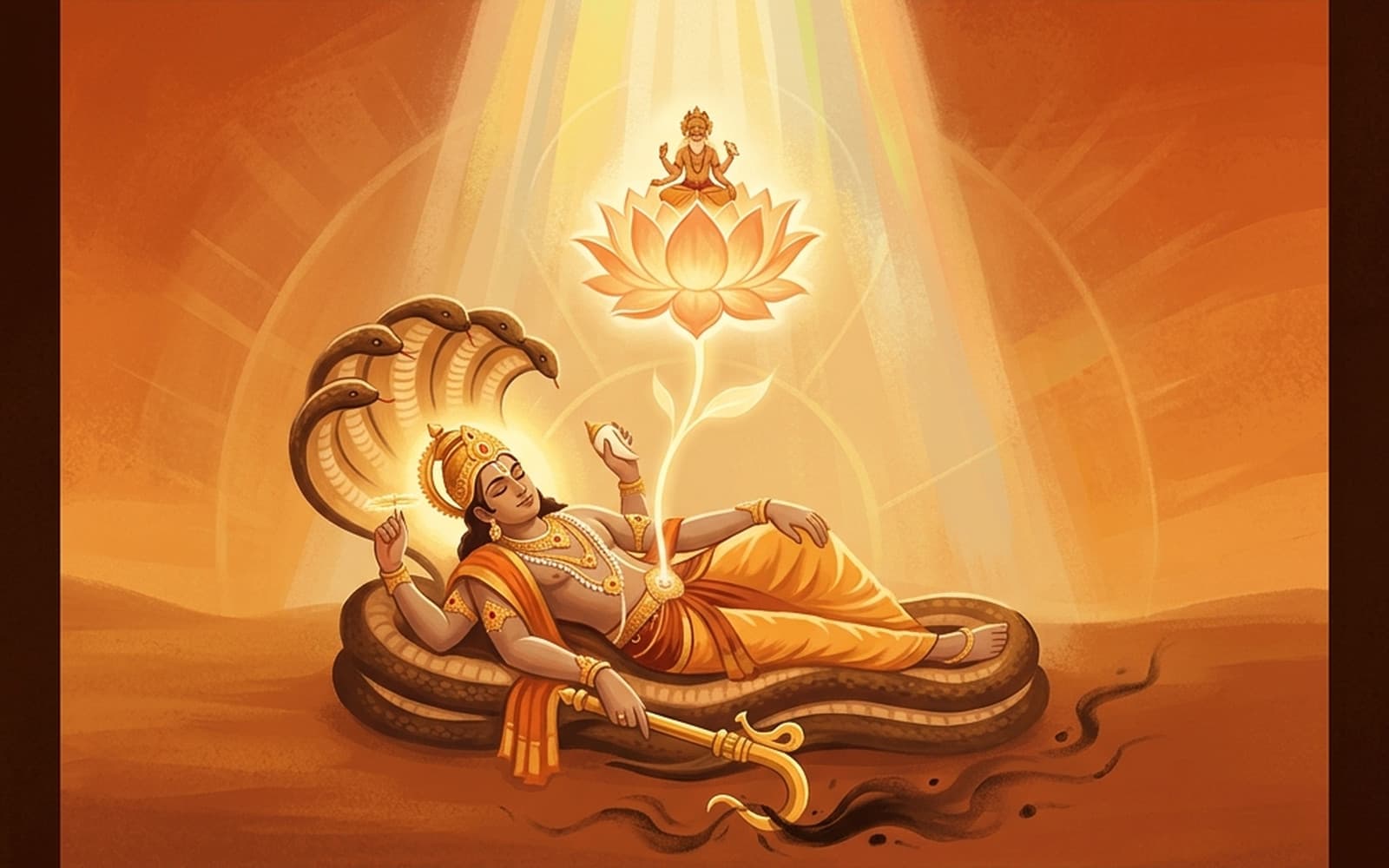
Papankusha Ekadashi wears its meaning on its face. The name joins two words — papa, sin, and ankusha, the iron goad a mahout uses to steer an elephant. Read together they make a single image: this day is the hook that reins sin in and turns it from its course. It falls on the eleventh tithi of the bright fortnight of Ashwina, in the clear days that follow Dussehra, and it is kept as a fast for Vishnu worshipped here as Padmanabha — the lord from whose navel the lotus of creation is said to rise.
What draws people to this particular Ekadashi is the scale of what is promised for so little asked. The old texts weigh a single day's fast against the merit of great yajnas and long pilgrimages, and hold that it opens the way toward heaven and, in the end, liberation. Its gentlest claim is the most striking: this grace does not depend on severe austerity. For those who cannot punish the body with hard penance, one sincere fast, kept with faith, is said to be enough.
Papankusha Ekadashi: key facts
Date in 2026
Thursday, 22 October 2026
Lunar month
Ashwina · Shukla Paksha (after Dussehra)
Deity
Lord Vishnu (Padmanabha)
The day marks
A goad against sin · fast, charity, vigil
Also called
Pashankusha Ekadashi
This year's date & tithi window
Observance day and tithi window for your city
Papankusha Ekadashi 2026 falls on Thursday, 22 October 2026. The Ekadashi tithi runs from 21 October 2026, 02:13 PM to 22 October 2026, 02:49 PM.
Tithi begins
21 October 2026, 02:13 PM
Tithi ends
22 October 2026, 02:49 PM
| Year | Observance day |
|---|---|
| 2026 | Thursday, 22 October 2026 |
| 2027 | Monday, 11 October 2027 |
Times shown for New Delhi; pick your city on the Ekadashi calendar for local timings.
The goad that curbs sin
Padmanabha Vishnu and the meaning of papa-ankusha
An ankusha is the mahout's tool — a short staff ending in a hook, used not to wound the elephant but to guide a vast strength that would otherwise go where it pleased. Set that image beside the word papa, and the name of the day explains itself: sin is the elephant, heavy and slow to turn, and this Ekadashi is the goad that checks it.
The form of Vishnu honoured here is Padmanabha — 'lotus-naveled' — the aspect from which, in the old cosmology, the lotus bearing the created worlds unfolds. To worship the source of creation on a day named for the curbing of sin sets the tone of the whole observance: it is less a plea for gain than a turning away from wrongdoing, a day given to setting one's own course straight.
That is why the fast is described not as penance for its own sake but as correction — a single day set apart to rein in what the rest of the year lets run loose.
Merit weighed against great yajnas
A single sincere fast, and the door it opens
Few observances promise as much for a single day's discipline. The scriptures that praise Papankusha Ekadashi set its fruit alongside the ashvamedha and other great sacrifices, and beside the merit gathered on long pilgrimages to sacred waters — rites that in their time demanded wealth, priests and years. A day's fast, kept in faith, is placed on the same scale.
The reach of that merit is wide. It is said to lighten the burden of past wrongs, to incline the way toward heaven, and to loosen the hold of birth and death. And unusually, the reward is not reserved for the great ascetic. The tradition is explicit that one who cannot bear harsh austerity need not despair — a sincere fast on this day is held to carry a seeker as far as long penance would.
A promise within anyone's reach
Fast, worship, charity, a night kept awake
How the day is spent before Padmanabha
The day begins before sunrise with a bath and a sankalp — the quiet resolve to keep the vow. Padmanabha Vishnu is then worshipped with tulsi leaves, a lamp, incense and the reading of the Ekadashi katha. Grain and pulses are set aside; some keep a complete fast, while others take fruit and milk as their strength allows.
Two acts give this Ekadashi its particular character. One is daan — charity — food, clothing or a gift placed in the hands of someone who needs it, offered as the fruit of the fast rather than in expectation of return. The other is the night vigil: many keep watch through the hours of darkness with the names of Vishnu, bhajan and remembrance, letting the fast run unbroken from one dawn to the next.
Keep the vow to your own strength
Dwadashi morning — closing the vow
The parana window that completes the fast
The vow is not complete until it is closed. Parana — the breaking of the fast — is done the next morning on Dwadashi, after sunrise and before the Dwadashi tithi has passed, and never during Hari Vasara, the first quarter of that tithi. It is broken gently, with tulsi water and simple sattvik food, and by custom with a last gift of charity before one eats.
Timing matters here as much as on the Ekadashi itself; a fast broken too early or too late is held to lose its fruit. Because sunrise and the tithi's end shift with your location, the exact window changes from city to city — check that morning's panchang for the precise parana time where you are.
Mind the parana window
See today's live panchang for your city
Tithi, nakshatra, sunrise and the day's muhurat — computed for wherever you are.
Papankusha Ekadashi — your questions answered
The name, the merit, the vidhi and the parana