
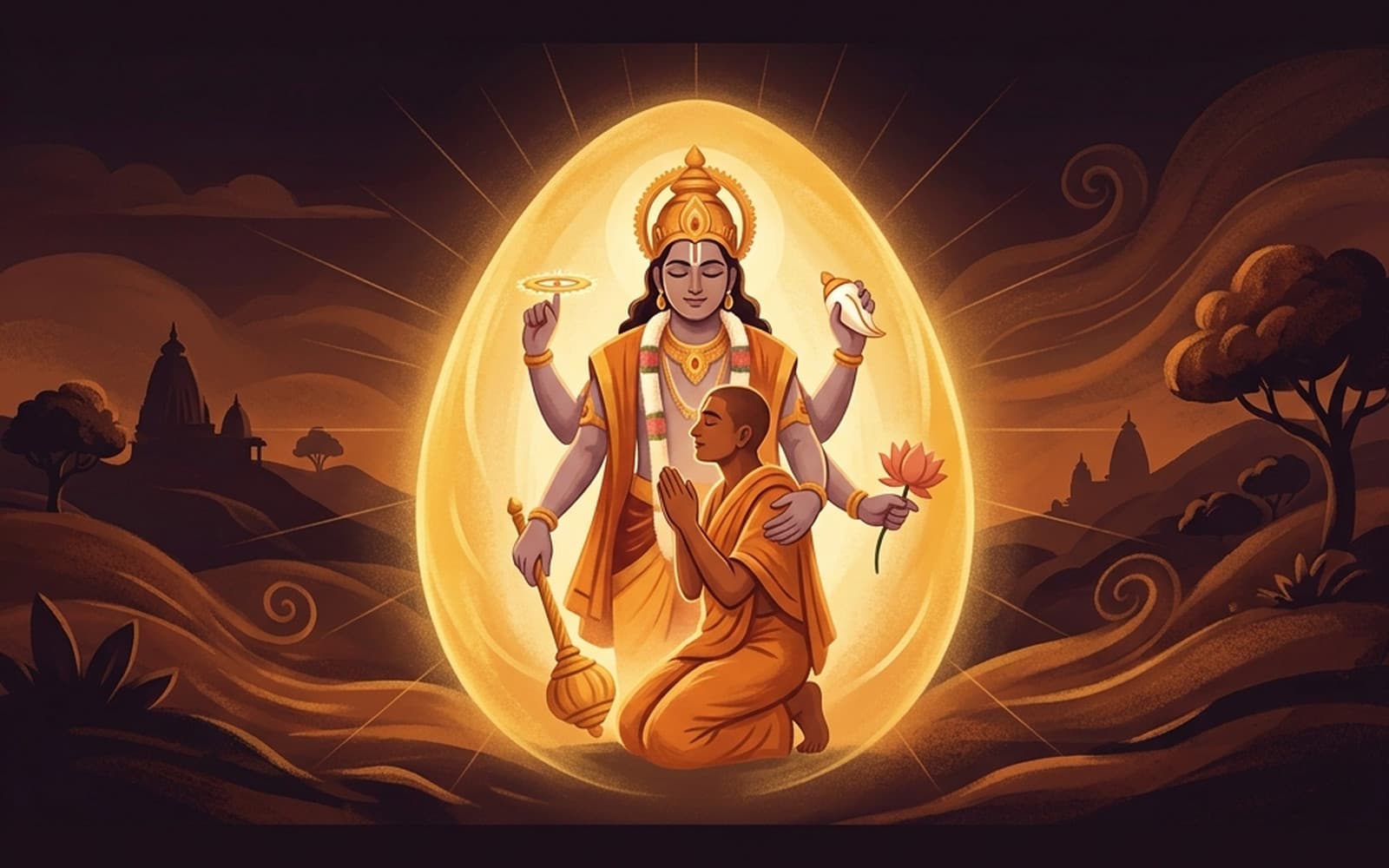
Varuthini borrows its name from varutha, an old word for armour — the plating a soldier straps on before walking into anything dangerous. That single image tells you what the day is for. Falling on the eleventh tithi of Vaishakha's waning half, it is kept, in the tradition's own metaphor, as protection worn against misfortune and unseen harm.
The texts are generous about the reward. Krishna, recounting the day to Yudhishthira, sets its merit beside the grandest acts of giving — gold pressed into a priest's hands, land signed over, horses and elephants led to a new owner. Keep the fast, the promise runs, and you gather good fortune, steady welfare, and an ease that carries past this life into liberation. And of all the Ekadashis, this is the one that leans hardest on charity.
When Varuthini Ekadashi falls
The eleventh tithi of Vaishakha's dark fortnight — your city's exact window is computed below.
Varuthini Ekadashi 2027 falls on Sunday, 2 May 2027. The Ekadashi tithi runs from 01 May 2027, 06:54 PM to 02 May 2027, 07:53 PM.
Tithi begins
01 May 2027, 06:54 PM
Tithi ends
02 May 2027, 07:53 PM
| Year | Observance day |
|---|---|
| 2026 | Monday, 13 April 2026 |
| 2027 | Sunday, 2 May 2027 |
Times shown for New Delhi; pick your city on the Ekadashi calendar for local timings.
What the day holds
Date in 2027
Sunday, 2 May 2027
Lunar month
Vaishakha, Krishna Paksha (waning)
Presiding deity
Lord Vishnu
What it grants
Protection, fortune and merit earned through charity
Also known as
Vaishakha Krishna Ekadashi; the 'armour' vrat
The armour hidden in the name
Varutha means armour — and this fast is worn like one.
Varuthini takes its name from varutha, an old word for armour, the covering a warrior fastens on before he steps into anything that can hurt him. That single image tells you what the day is for. To keep the fast on the eleventh tithi of Vaishakha's waning half is, in the tradition's own words, to put on protection — against misfortune, and against the harm that gives no warning.
The texts do not stint on the reward. Krishna, describing the day to Yudhishthira, sets its merit beside the largest acts of giving a person could manage — gold pressed into a priest's hands, land signed away, horses and elephants led to a new owner. Whoever keeps the fast, the promise runs, gathers good fortune, unbroken welfare, and an ease that carries past this life into liberation.
And of every Ekadashi, this is the one that rests most heavily on charity. The protection is not bought with hunger alone. What you give away — food to someone who has none, a coin, a small kindness — is treated as the clasp that actually fastens the armour on.
A day of giving
The king the bear would not let go
Krishna's story for Yudhishthira: a man mauled in the forest, and the god who pulled him out.
When Yudhishthira asked what the day was worth, Krishna answered with a story. Among the kings it had lifted he named Mandhata; then he told, at length, of another — a ruler remembered as Dhundhumara, who wandered too far into the forest and lost his way.
A bear found him there. It closed its jaws on his foot and began to drag him deeper in, gnawing as it pulled, and the king — a warrior with nothing left to fight with — did the only thing left to do. He called on Vishnu. The god came, freed him from the animal, and let him live.
But the escape had cost him. He was torn and unwhole, no longer the man who had ridden in. It was by keeping Varuthini Ekadashi, Krishna says, that he was made right again — healed in body, shielded from further harm, given back the wholeness the forest had taken. The day that saved a mauled king, the story implies, is the same armour it offers anyone who keeps it.
The day given to Vishnu — and to giving
Restraint, worship, and charity held at the centre of the observance.
The shape of the day is familiar to anyone who keeps Ekadashi. Grain is set aside; many hold a full fast, others a partial one on fruit and milk, and the strict begin their restraint the evening before. The hours turn toward Vishnu — his name repeated, a lamp lit, tulsi offered, the Ekadashi story read or heard.
What sets Varuthini apart is where the weight falls. Here charity is not an add-on to the worship; it sits close to the point of it. Feeding someone, giving what you can to a person who needs it more than you do, is held to complete the vrat in a way that fasting by itself does not. The armour, in this telling, is woven as much from generosity as from restraint.
First light on Dwadashi, and the fast set down
Completing the vrat the morning after.
The fast is not meant to be carried on and on. It is set down the next morning, on Dwadashi, inside the window the panchang marks after sunrise — early enough that the twelfth tithi has not slipped away, since letting it lapse is thought to undo part of the merit.
Custom asks that you give before you eat. A little food or a small gift goes out first, in keeping with the whole temper of the day; only then is the fast broken, gently, with something simple. The city-specific parana window sits in the panchang below — the exact minutes shift with your sunrise.
See today's live panchang for your city
Tithi, nakshatra, sunrise and the day's muhurat — computed for wherever you are.
Varuthini Ekadashi: common questions
The name, the story, and how the day is kept.