
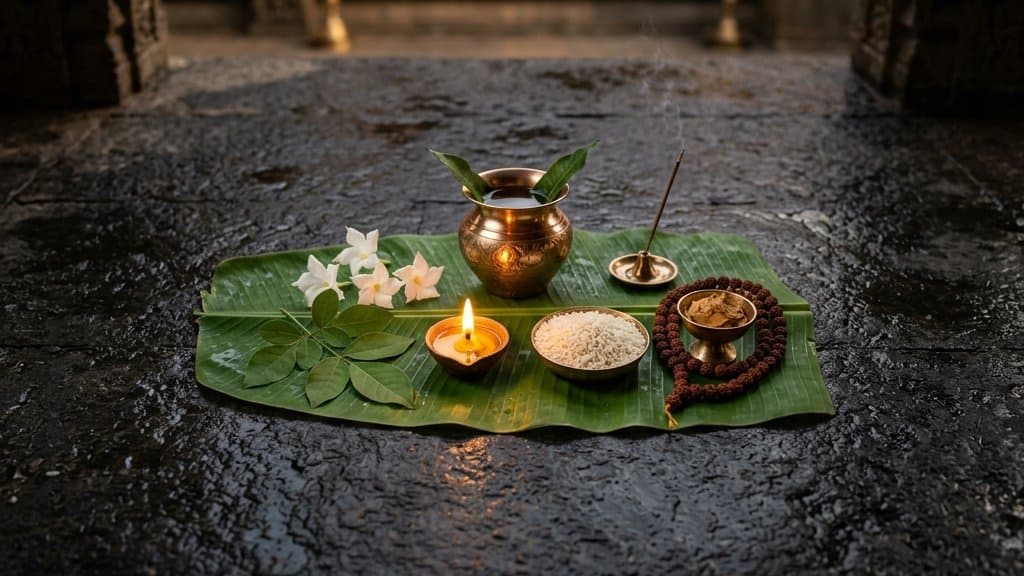
On the Mondays of Sawan, devotees keep the Sawan Somwar vrat and bathe the Shivling in water — the simplest and dearest offering to Lord Shiva. The fast is a vow taken in the morning and carried, with a calm and sattvic mind, through the day.
This guide walks through the full puja vidhi step by step, the rules (niyam) to keep during the fast, the samagri you will need, the jalabhishek and abhishek method, and how to do the parana — with separate notes for married and unmarried women.
Sawan Somwar vrat puja vidhi
The morning-to-evening method, step by step
Wake early & bathe
Rise before sunrise, bathe, and wear clean — ideally light or white — clothes. Clean the puja space and place the Shivling or a picture of Lord Shiva facing east or north.
Take the sankalp
Sit facing the deity, take a little water and rice in your right hand, and take the sankalp — a quiet vow stating your name, the purpose of the fast, and that you will keep it through the day. This intention is what makes the day a vrat and not just a puja.
Jalabhishek
Offer water over the Shivling in a thin, steady stream while chanting “Om Namah Shivaya”. Pure water alone is enough. Pour with the right hand and keep the mind on Shiva rather than counting the flow.
Panchamrit abhishek
For a fuller abhishek, bathe the Shivling in turn with milk, curd, ghee, honey and sugar — the panchamrit — and then with clean water again to rinse. Where milk is offered, use raw (unboiled) milk.
Offer bel patra & flowers
Offer bilva (bel) patra with the smooth side down, along with white flowers, akshat (unbroken rice), sandalwood paste, dhatura and, if you keep the tradition, bhang. Apply a chandan tripund and light a lamp and incense.
Chant, katha & aarti
Chant “Om Namah Shivaya” or the Maha Mrityunjaya mantra, read or listen to the Sawan Somwar vrat katha, and close with the Shiv aarti. Offer a bhog of fruit or kheer and distribute it as prasad.
Jalabhishek & abhishek method
How to bathe the Shivling correctly
Jalabhishek is the heart of the Sawan Somwar puja. Pour clean water over the Shivling in a thin, steady stream while chanting “Om Namah Shivaya” — pure water alone is enough. For a fuller abhishek, bathe the Shivling in turn with panchamrit (raw milk, curd, ghee, honey and sugar), then rinse with clean water, and finish by offering bilva patra, white flowers and dhatura. Keep the flow gentle and the mind on Shiva rather than on counting.
Maha Mrityunjaya japa
Vrat niyam — the rules of the fast
What to keep and what to avoid through the day
- Keep the sankalp firmly in mind through the day — a vrat is a vow, not just a diet.
- Stay on phalahar (fruit fast); avoid grains, common salt, onion and garlic.
- Bathe before the puja and again before the evening worship if possible; keep clean.
- Speak truthfully and gently, and avoid anger and quarrels for the day.
- Do not sleep in the daytime; spend time in Shiva’s name, japa or the katha.
- Observe brahmacharya (continence) and a sattvic, restrained conduct through the vrat.
Sawan Somwar vrat samagri
Everything to gather before the puja
Parana — how to break the fast
Ending the vrat the right way
Most devotees keep the fast until the evening Shiva worship and then break it with the prasad — fruit, milk or kheer. Those who keep a nirjala (waterless) or a full-day fast often do the parana the next morning, after bathing and a short puja. However you fasted, break it gently with sattvic food, avoiding grains and common salt if you were on phalahar. The parana completes the vrat, so end it with gratitude and a final “Om Namah Shivaya”.
For married and unmarried women
Same vidhi, different sankalp
The core vidhi is identical for everyone; only the intention behind the sankalp differs. Married women usually keep the Sawan Somwar vrat for the long life and wellbeing of their husbands and the harmony of the home. Unmarried women keep it — or the more demanding Solah Somwar, the sixteen-Monday vow — praying to Shiva for a worthy partner and a happy married life. There is no restriction on who may fast; sincerity of devotion matters most.
Solah Somwar
Plan your Monday puja by the panchang
For the day’s sunrise, tithi and the auspicious windows to time your puja and parana, use our live tools.
Frequently asked questions
Sawan Somwar vrat vidhi and rules