
The name of the festival is the clue to its timing. Bhai Dooj — Bhai Beej in the west, and Yama Dwitiya in the panchang — takes that last name from the day Yamraj, the lord of death, came to the home of his sister Yamuna and let her mark his forehead with a tilak. In 2026 the day is Wednesday, 11 November, the Dwitiya of Kartika's bright fortnight, and the tilak that gives the festival its meaning is not a morning rite: it is kept in the aparahna, the afternoon, and only while the Dwitiya tithi still prevails — this year until 3:55 PM.
That window is the heart of the day. A sister seats her brother, applies the tilak and prays for his long life; the brother, in turn, gives her a gift and renews his promise to protect her. Because the Dwitiya must still be running for the tilak to hold, the muhurat sits in a short afternoon band that shifts with your city — about 1:09 to 3:19 PM in New Delhi and 1:29 to 3:45 PM in Mumbai. The same afternoon carries a second observance: Chitragupta Puja, the worship of the divine record-keeper who is said to note every soul's deeds, kept with special devotion in Kayastha homes. Bhai Dooj is the last of Diwali's five days, and it closes them not with lamps or wealth but with the oldest of bonds — the one between a brother and a sister.
Bhai Dooj 2026 at a glance
Festival day
Wed, 11 November 2026
Tithi
Kartika Shukla Dwitiya
Tilak muhurat
Delhi 1:09 – 3:19 PM
Dwitiya till
11 Nov 3:55 PM
Also today
Chitragupta Puja
In the calendar
Last of Diwali’s five days
Tilak muhurat, by city
The aparahna window — kept while the Dwitiya prevails
New Delhi
1:09 – 3:19 PM
Aparahna · while the Dwitiya prevails
Mumbai
1:29 – 3:45 PM
Aparahna · while the Dwitiya prevails
The tilak is kept in the aparahna — the early-afternoon part of the day — and only while the Dwitiya tithi still prevails, which in 2026 is until 3:55 PM on 11 November. Because that end is a fixed moment while sunrise differs from city to city, the auspicious afternoon band is not one national time: it runs about 1:09 to 3:19 PM in New Delhi and 1:29 to 3:45 PM in Mumbai. Both windows close well before the Dwitiya runs out, so the tilak is offered with the tithi intact. The aparahna is the traditional and preferred time for it, so families aim to seat the brother and offer the tilak within that afternoon band.
The tilak vidhi and Chitragupta Puja
The thali, the tilak, a sister's prayer and the brother's gift
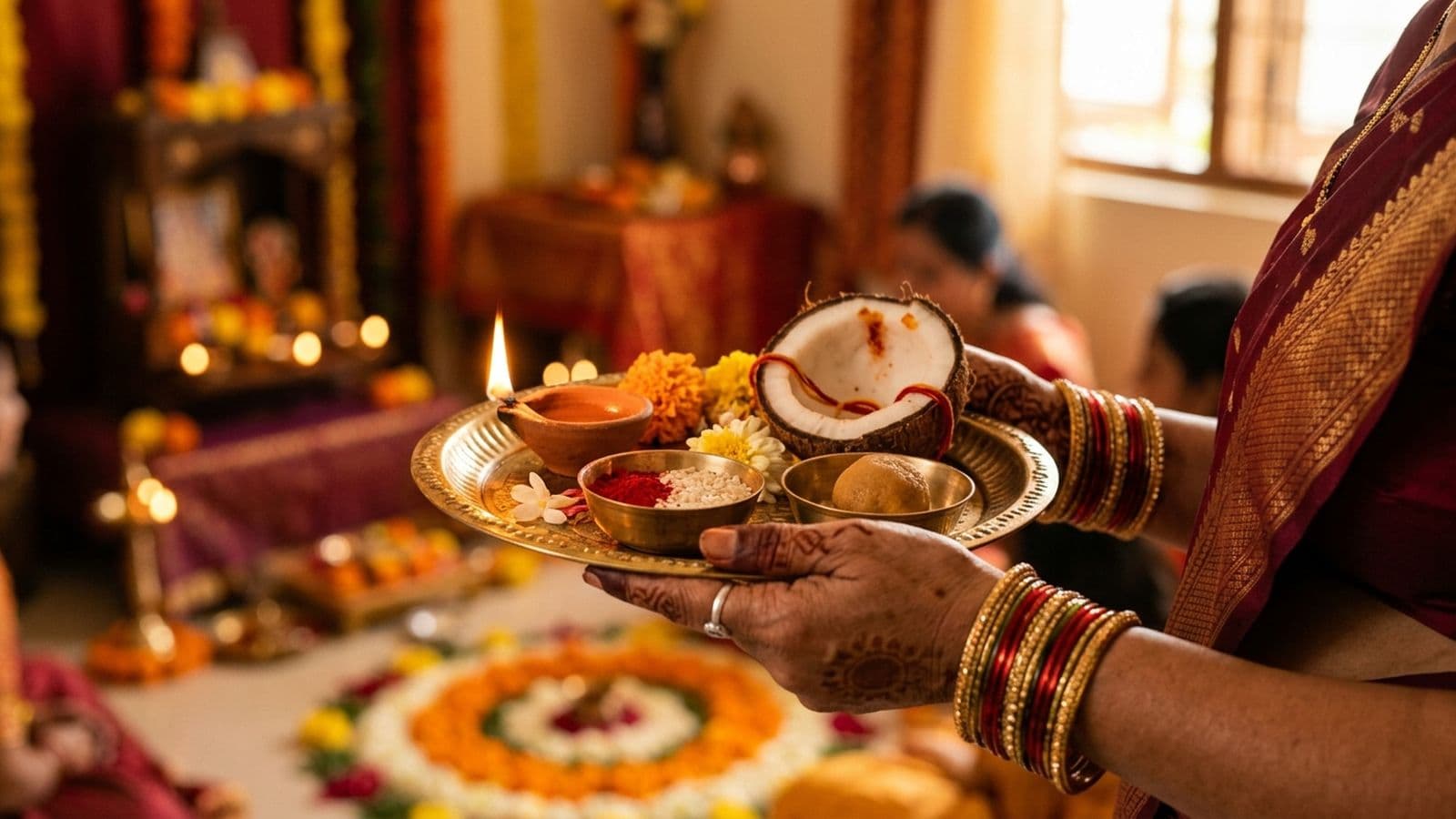
The sister prepares a thali — a lit lamp, roli or a sandal-and-kumkum tilak, unbroken akshat rice, sweets and often a coconut — and seats her brother facing east or north during the aparahna. She lights the lamp, applies the tilak to his forehead, offers akshat, feeds him a sweet with her own hand, and prays for his long life and wellbeing; the brother, in turn, gives her a gift and renews his promise to protect her. Where the Yama tradition is kept, a lamp is also set aside in Yamraj's name so the family is spared untimely death. The same afternoon is Chitragupta Puja: Chitragupta is the divine scribe who keeps the record of every being's deeds, and he is worshipped with special devotion in Kayastha homes, where the pen, the inkpot and the account-books are honoured before him.
The Yama–Yamuna katha and its meaning
Why the day is called Yama Dwitiya, and the bond it honours
The panchang name of the day, Yama Dwitiya, holds its oldest story. Yamraj, the lord of death, had long been parted from his sister Yamuna, and on this Dwitiya of Kartika he came at last to her home. Yamuna received him with joy — she bathed and fed him and marked his forehead with a tilak — and Yama, moved, granted a boon: whoever receives a tilak from his sister on this day, and any brother who visits and eats at his sister's home, would be freed from the fear of an untimely death. From that boon the day takes both its name and its meaning. The tilak is not a formality but a sister's prayer for her brother's life, answered by Yama's own promise — and it is why Bhai Dooj closes the five days of Diwali not with lamps or wealth but with the oldest of bonds, the one between a brother and a sister.
See the Dwitiya tithi and muhurat for your city
The tilak windows above are for Delhi and Mumbai. For the Dwitiya tithi, the sunrise and the day's choghadiya where you live on 11 November, open the live panchang.
Bhai Dooj 2026 — your questions
The date, the tilak muhurat, the katha and Chitragupta Puja