
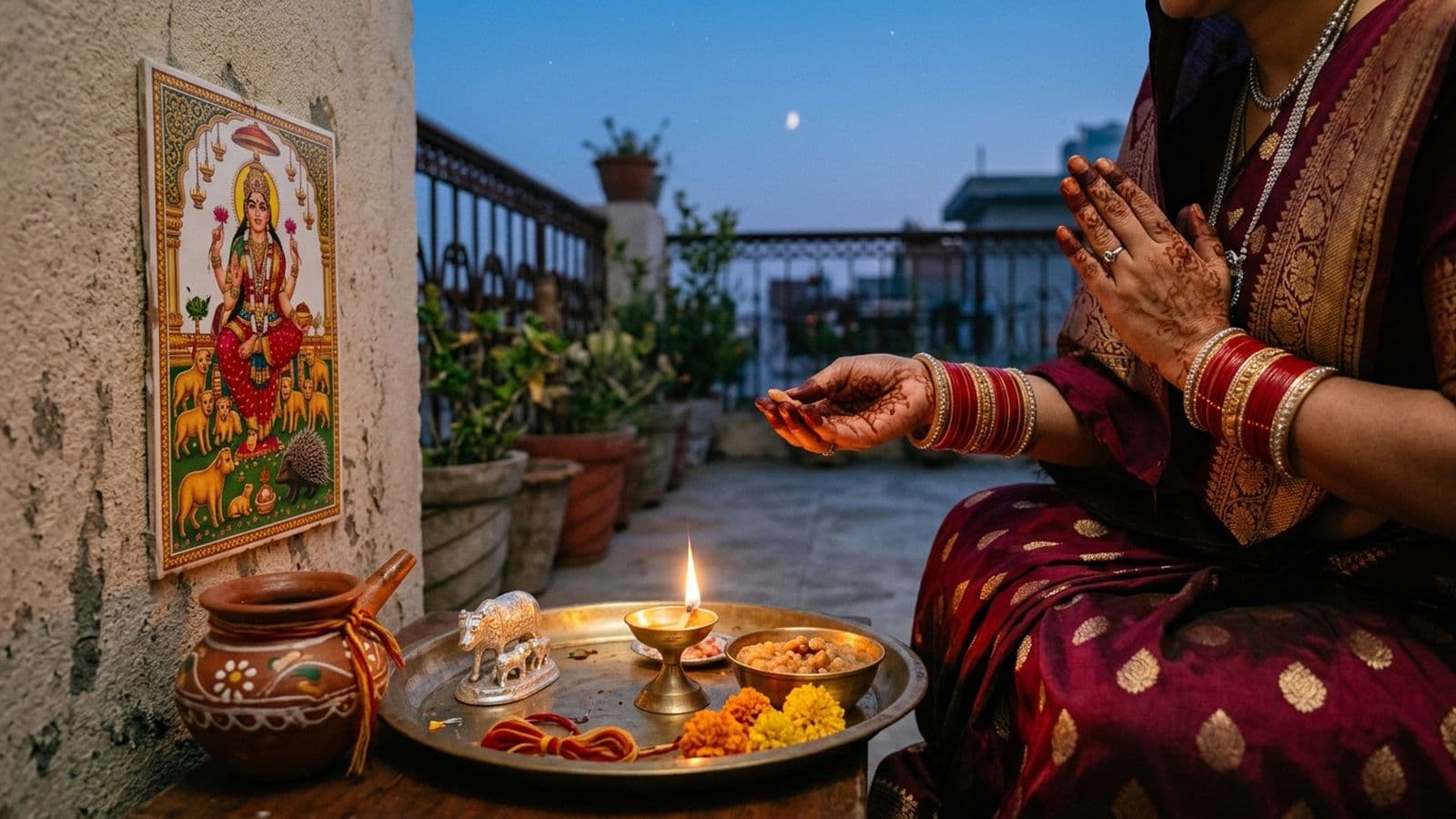
Ahoi Ashtami in 2026 falls on Sunday, 1 November, and the whole day belongs to mothers. Where Karwa Chauth, eight days earlier, is the wife's fast for her husband, Ahoi Ashtami is the mother's fast for her children — kept on the Ashtami of Kartik's waning fortnight, eight days after Karwa Chauth and eight days before Diwali. Through the day she takes no food or water, and in the evening she worships Ahoi Mata, drawn on a wall with her cubs — the seven little ones — gathered around her.
What sets this vrat apart is how it ends. Most such fasts are broken at moonrise, but on Ahoi Ashtami the moon rises very late — near 11:36 PM in New Delhi this year — so mothers do not wait for it. They break the fast at tara-darshan, the first sighting of the stars after sunset, which in New Delhi is around 5:35 PM. Only in a few places, by the Radha Kund tradition, is the fast held all the way to the late moon; for most, it is the stars, not the moon, that release it.
Ahoi Ashtami 2026 at a glance
Festival day
Sun, 1 November 2026
Tithi
Kartik Krishna Ashtami
Who keeps it
Mothers, for their children
Break the fast
Tara-darshan ~5:35 PM
Moonrise
~11:36 PM (very late)
Festival line
8 days after Karwa Chauth
When the fast breaks: stars, not the moon
Tara-darshan and the late moonrise, for New Delhi
Tara-darshan — break the fast
After sunset ~5:35 PM (New Delhi)
When the first stars appear in the evening sky
Moonrise — very late
~11:36 PM (New Delhi)
The Radha Kund tradition breaks the fast on this moon instead
Both times above are for New Delhi and shift with your own city's sunset and moonrise. Tara-darshan is not a fixed clock time — it is the first sighting of the stars once the sky darkens after sunset, so a clear view to the east or overhead helps. The moon, by contrast, does not rise until close to midnight this year, which is exactly why the fast is not tied to it. If your family follows the Radha Kund custom of breaking on the moon, plan for that very late moonrise; otherwise the stars, soon after 5:35 PM, mark the paran.
The vrat vidhi, step by step
Ahoi Mata, the karwa and silver syahu, and the argh
The heart of the puja is Ahoi Mata drawn on a wall — a mother figure with her cubs, the seven little ones, ringed around her — or, in many homes now, a printed picture set at the place of worship. Before her are placed a karwa filled with water and, by tradition, a small silver ahoi or syahu; some families add a silver bead to a thread each year, one for each child, and worship the growing string. Through the day the mother keeps a nirjala fast, without food or water. In the evening she cleans the spot, offers roli, rice, water and a bhog of sweets or pua, lights the lamp, and reads or hears the Ahoi katha with the other women of the house. When the first stars appear she offers argh with water from the karwa toward them, prays for her children's long life, and only then breaks her own fast — in many homes after she has fed the children first.
The katha of the syahu's young
The story behind the vow, and what the vrat means
The story kept alive by the vrat is a plain and piercing one. A woman digging near her house — for clay, the tellings say — accidentally struck the burrow of a syahu, a porcupine, and killed her young. Soon misfortune settled on the woman's own family and her children suffered, until she understood the harm she had done. She sought the syahu mother's forgiveness and vowed to worship Ahoi Mata, the guardian of every creature's young, and with that vow kept, her own children flourished once more. The meaning of the vrat sits in that exchange: a mother's care is not for her children alone but for all young, and the blessing she gives returns to her own. It is why Ahoi Ashtami, for all its focus on sons and long life, is at heart a day about a mother's boundless, careful love.
Eight days earlier is Karwa Chauth
See today's panchang and sunset for your city
The tara-darshan and moonrise above are for New Delhi. For your own city's sunset, moonrise and choghadiya on 1 November — or any day — open the live panchang.
Ahoi Ashtami 2026 — your questions
Date, tara-darshan, the vidhi and the katha