
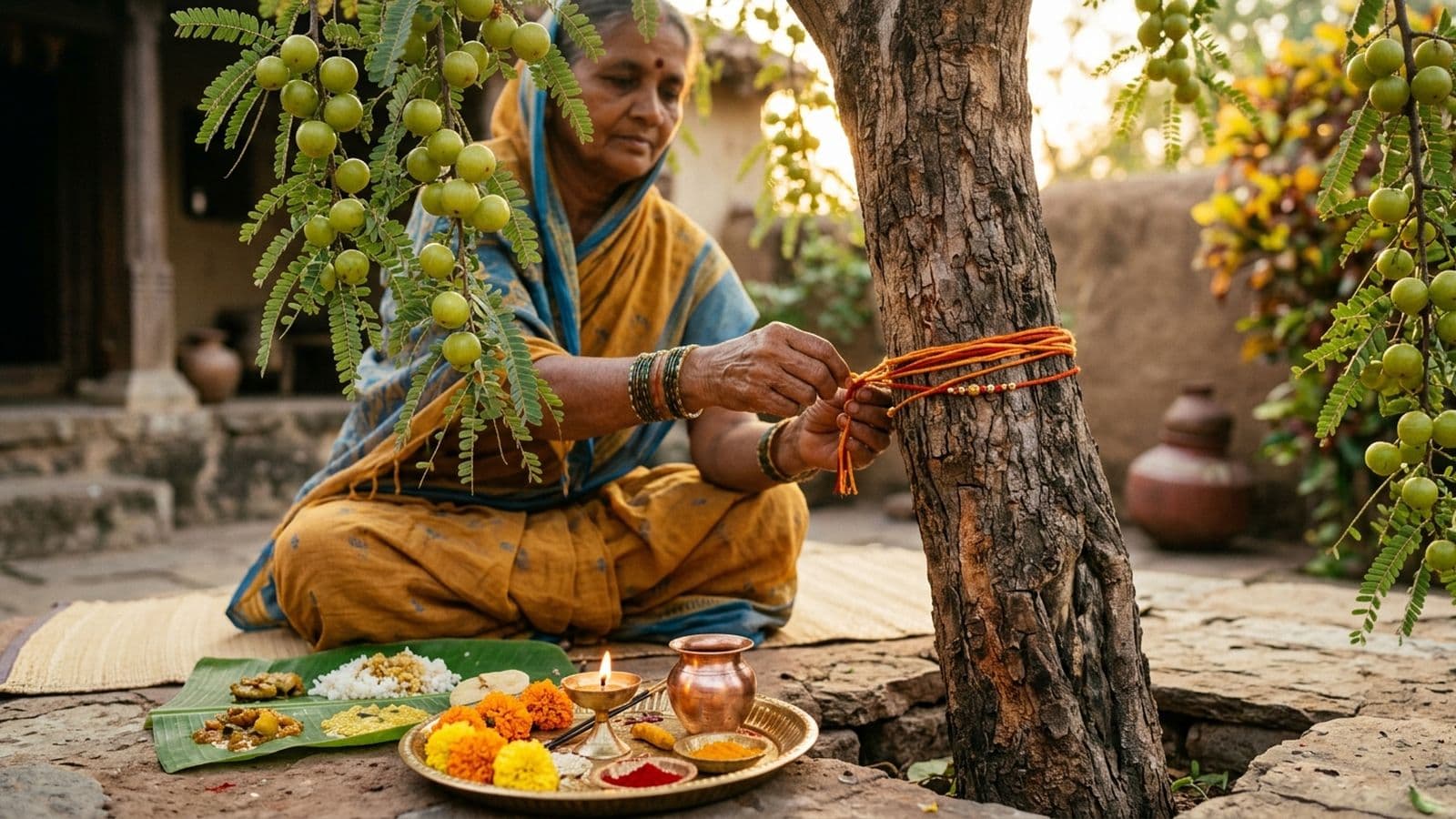
Akshaya Navami in 2026 falls on Wednesday, 18 November, and its central act is unlike anything else in the Kartik calendar: the amla, the Indian gooseberry, is not merely eaten but worshipped. Families gather at an amla tree in the morning, honour it with water, a lamp and a thread wound round the trunk, and then — the part that names the day in most homes — cook a meal on the spot and eat it sitting in the tree's shade. The gooseberry is held dear to Vishnu, who is said to dwell in the tree on this navami, so the worship is offered to the living tree itself.
The other half of the day's meaning is in the word akshaya — undecaying, that which never runs out. Whatever good is done on this Kartik Shukla Navami — the bath, the tree puja, the daan, the feeding of others under the branches — is believed to carry akshaya merit, a store of punya that stays with the doer and does not wear away. That is why the same navami is also called Amla Navami and Kushmanda Navami, and in tradition is tied to the beginning of the Dwapar Yuga. It sits in the bright half of Kartik, after Dev Uthani Ekadashi and before Kartik Purnima.
Akshaya Navami 2026 at a glance
Festival day
Wed, 18 November 2026
Tithi
Kartik Shukla Navami
Signature
Amla (gooseberry) tree puja
The meal
Cooked & eaten under the tree
'Akshaya' means
Undecaying (never-ending) merit
Also called
Amla / Kushmanda Navami
Akshaya & Amla Navami 2026
18 November — Kartik Shukla Navami, present all day
Akshaya / Amla Navami
Wednesday, 18 November 2026
Kartik Shukla Navami, present all day
Puja & the meal
Morning, under the amla tree
Worship the tree, then a meal cooked beneath it
Both cards point to the same morning. The navami is present through 18 November, so the amla-tree worship and the meal beneath it are kept in the daytime, unhurried. This is a tree-centred vrat: the family does not bring the amla home to a shrine but goes out to the tree, worships it where it stands, and then eats in its shade.
How the amla tree is worshipped
The morning puja, the thread, and the meal beneath the tree
The day begins with a bath, after which the family goes to an amla tree and readies it: the ground around it is swept and watered, and a raksha thread is wound round the trunk. The tree is then honoured as a deity — a lamp is lit, roli and rice are offered, some pour a little milk at the roots, and the tree is circumambulated in prayer. Then comes the part that gives the festival its household name: a meal is cooked at the spot and the whole family sits and eats it in the tree's shade, sharing the food and often feeding brahmins or those in need. Amla fruit, food and other gifts are given in daan, an act believed to carry lasting merit on this day. Where a grown amla tree is out of reach, a branch or a potted amla plant is worshipped and the meal taken beside it instead.
Just before, in Kartik
Why the merit is called 'akshaya'
Vishnu, the amla, and the katha of the undecaying day
The name holds the reason. Akshaya means undecaying — a-kshaya, without loss — and on this navami the fruit of good action is believed not to diminish: the merit of the bath, the puja, the daan and the meal shared under the tree stays with the doer, akshaya, inexhaustible. The amla is at the centre of it because the gooseberry is dear to Vishnu, and on this day he is said to reside in the tree, so worshipping the amla is worshipping him. The katha of the day tells of the merit that never runs dry, and tradition also marks this navami as the dawn of the Dwapar Yuga, one of the yuga-beginnings the old reckoning fixes to a tithi. All of it sits inside Kartik, the most punya-laden month: Vishnu has just risen at Dev Uthani Ekadashi, and Kartik Purnima, the month's luminous close, is only days ahead.
And soon after
See the tithi and sunrise for your city
The navami is present through 18 November. For your own city's sunrise, tithi and choghadiya on the 18th — or any day — open the live panchang.
Akshaya Navami 2026 — your questions
Date, the amla-tree puja, the meal and the 'akshaya' meaning