
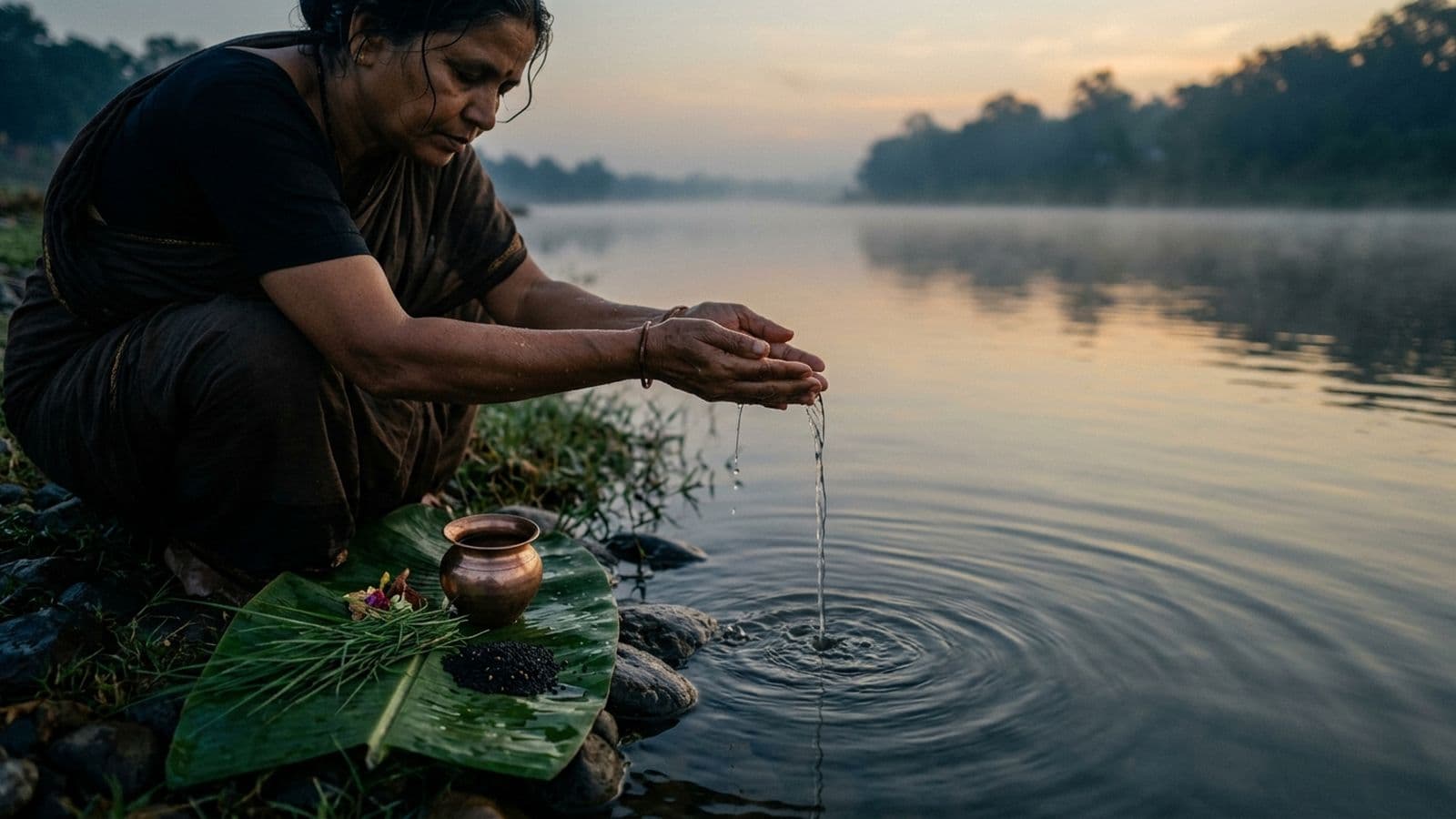
Bhadrapada Amavasya 2026 falls on Friday, 11 September, and the first thing worth settling is which amavasya it is — because it is regularly mistaken for the one that closes Pitru Paksha. This is the Kushotpatini Amavasya, the single new moon of the year on which kusha grass is cut and stored for every ritual to follow; in Maharashtra it is kept as Pithori Amavasya, and across the Telugu country as Polala Amavasya. It is not the Sarva Pitru Amavasya. On this date in 2026 Pitru Paksha has not even begun — it starts on 27 September, and its Sarva Pitru Amavasya falls on 10 October, a full month after this one.
The date follows a simple rule: the amavasya tithi is present at sunrise on the 11th — 6:04 AM in New Delhi — and does not end until 8:58 AM, so the snan, daan and amavasya observances are counted on Friday the 11th, even though the new moon is over by mid-morning. Water for the ancestors is offered in the aparahna, the afternoon segment, which runs 1:32 to 4:02 PM in New Delhi. And an honest reminder for the year: this tarpan is the ordinary monthly remembrance of an amavasya — the formal Pitru-Paksha shraddha still lies a month ahead.
Bhadrapada Amavasya 2026 at a glance
Amavasya day
Fri, 11 September 2026
Tithi
Bhadrapada Krishna Amavasya
Also called
Kushotpatini · Pithori
Amavasya tithi
At sunrise → ends 8:58 AM
Tarpan (aparahna)
Delhi 1:32 – 4:02 PM
Not Sarva Pitru
That is 10 Oct 2026
The tithi and the tarpan window
New Delhi — amavasya at sunrise, and the afternoon for ancestors
Amavasya tithi
At sunrise → ends 8:58 AM
Sunrise 6:04 · Sunset 18:31 · Fri 11 Sep, New Delhi
Aparahna — tarpan for ancestors
1:32 – 4:02 PM
Afternoon segment · New Delhi
An amavasya is counted for the day on which it meets sunrise, and on 11 September the new moon is already in the sky at daybreak and lasts until 8:58 AM in New Delhi. Bathing and daan are done in the morning; the tarpan to the ancestors belongs to the aparahna, the fourth of the day’s parts, which opens at 1:32 PM here. Both windows shift with your city’s sunrise and sunset, so read your local panchang before you sit.
What is done on this amavasya
Cutting kusha, tarpan, and the regional vrats
The name Kushotpatini tells you the day’s chief work: this is the one amavasya of the year on which kusha grass is pulled for storage, and grass gathered now is held to stay fit for the year’s pujas, shraddhas and havans. Alongside it, water is offered to the pitr — a plain tarpan of black sesame and water in the afternoon. The day carries regional vrats of its own: in Maharashtra women keep Pithori Amavasya, worshipping sixty-four yoginis modelled in flour for the wellbeing of their children; across the Telugu states the same new moon is Polala Amavasya, kept for the goddess Polala and the protection of the young. None of this is Pitru-Paksha shraddha; it is the observance of a single amavasya.
Why it is not the Sarva Pitru Amavasya
One amavasya, a month before Pitru Paksha
The confusion is easy to make, because both are Bhadrapada amavasyas that touch the ancestors — but they are a month apart. This one, on 11 September, is a stand-alone new moon. Pitru Paksha, the fortnight set aside for shraddha, only begins on 27 September, and its closing day — the Sarva Pitru Amavasya, on which offerings are made for every departed elder whose tithi is unknown — is 10 October 2026. If your intention is the formal annual shraddha, that October date is the one to keep. Today’s significance is quieter and practical: a day to gather the year’s kusha, remember the pitr with water, and, in the households that keep them, hold the Pithori or Polala vrat.
See the amavasya timing for your own city
The sunrise and aparahna windows above are for New Delhi. For your city’s amavasya tithi, sunrise and choghadiya on 11 September — or any day — open the live panchang.
Bhadrapada Amavasya 2026 — your questions
Which amavasya, the date, kusha and tarpan